Many adults notice that maintaining their weight and energy feels different after 40. Changes in muscle mass, activity levels, sleep, stress, hormones, and eating habits can all influence how the body uses energy. While no single food can “boost” metabolism overnight, a balanced eating pattern can support the processes that help your body use calories, maintain muscle, and manage appetite.
The best foods to support a healthy metabolism after 40 tend to have a few things in common: they provide protein, fiber, vitamins and minerals, and satisfying fats. They also make it easier to build meals that keep you full and energized rather than leaving you hungry an hour later.
What Metabolism Means After 40
Metabolism refers to the many chemical processes your body uses to turn food into energy and keep you alive. This includes breathing, circulation, digestion, tissue repair, movement, and maintaining body temperature.
Your resting metabolic rate can gradually decline with age, partly because people often lose muscle mass and become less active over time. Muscle tissue uses more energy than fat tissue, even at rest. That is why strength training, regular movement, adequate protein, and nutritious meals are all important parts of supporting a healthy metabolism after 40.
Rather than searching for a magic metabolism food, focus on consistent habits that support your body over the long term.
1. Protein-Rich Foods
Protein is one of the most important nutrients for adults over 40. It helps preserve and build muscle, supports recovery from exercise, and is generally more filling than refined carbohydrates. Your body also uses a bit more energy digesting protein than it does digesting fats or carbohydrates, although this effect is not a substitute for an overall healthy routine.
Including protein at each meal may help you stay satisfied and make it easier to meet your daily needs.
Good protein choices include:
- Eggs
- Greek yogurt or cottage cheese
- Chicken or turkey
- Fish and seafood
- Lean beef or pork in moderate portions
- Tofu, tempeh, and edamame
- Lentils, beans, and chickpeas
- Protein-fortified milk or unsweetened soy milk
Practical idea: Start the day with eggs and vegetables, Greek yogurt with berries, or oatmeal made with milk and topped with nuts. At lunch and dinner, build meals around a palm-sized serving of protein.
2. High-Fiber Vegetables
Non-starchy vegetables are low in calories but rich in fiber, water, and micronutrients. Fiber supports digestive health, can help with fullness, and slows the digestion of carbohydrates. This may help create steadier energy after meals.
Vegetables also add volume to meals without requiring large portions of calorie-dense foods. For many people, this makes healthy weight management more sustainable.
Excellent choices include:
- Broccoli and cauliflower
- Leafy greens such as spinach, kale, and arugula
- Brussels sprouts
- Bell peppers
- Zucchini
- Green beans
- Asparagus
- Cabbage and coleslaw mixes
- Mushrooms
Practical idea: Aim to fill about half your lunch or dinner plate with non-starchy vegetables. Roast a large tray at the beginning of the week, or keep frozen vegetables on hand for quick meals.
3. Fiber-Rich Beans, Lentils, and Chickpeas
Beans, lentils, and chickpeas provide a valuable combination of plant protein, fiber, iron, magnesium, and slow-digesting carbohydrates. They can be especially helpful for building meals that are filling without relying heavily on highly processed foods.
Because they contain both carbohydrates and fiber, legumes tend to have a gentler effect on blood sugar than refined grains or sugary snacks. If you do not eat them regularly, begin with small portions and increase gradually to give your digestive system time to adjust.
Easy ways to use legumes:
- Add lentils to soup, chili, or pasta sauce.
- Use black beans in tacos, salads, or grain bowls.
- Blend chickpeas into hummus for a snack with vegetables.
- Replace part of the meat in a casserole with beans or lentils.
4. Whole Grains and Smart Carbohydrates
Carbohydrates are not the enemy of a healthy metabolism. Your body uses carbohydrates for energy, particularly during exercise and daily activity. The key is choosing carbohydrates that provide fiber and nutrients instead of mostly added sugar and refined flour.
Whole grains and starchy vegetables can fit well into meals, especially when paired with protein, vegetables, and healthy fats.
Better carbohydrate choices include:
- Oats
- Quinoa
- Brown rice or wild rice
- Barley
- Whole-grain bread or pasta
- Sweet potatoes
- Potatoes with the skin
- Winter squash
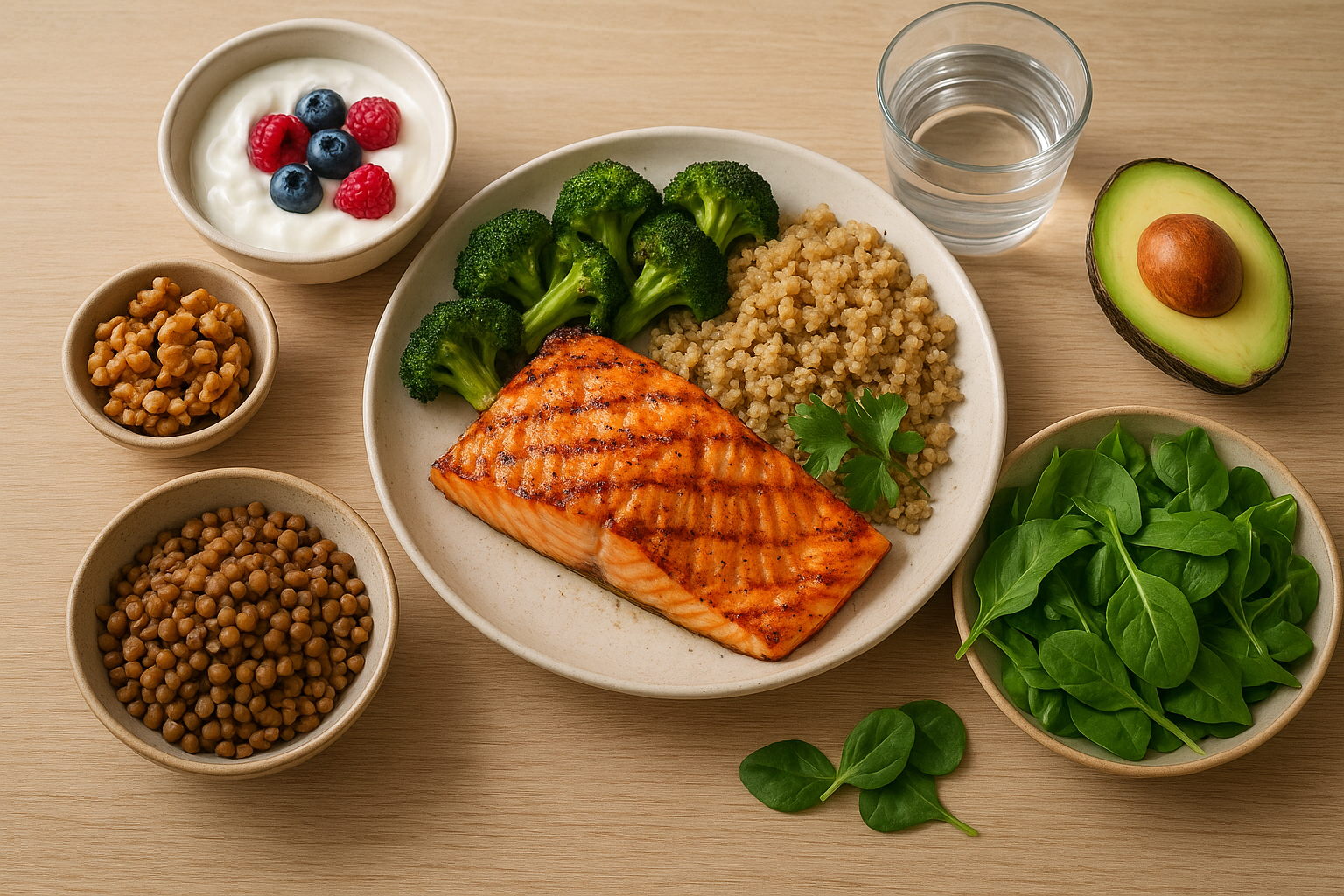
Practical idea: Pair a modest serving of a high-fiber carbohydrate with protein and vegetables. For example, try salmon, roasted broccoli, and a baked sweet potato, or chicken with quinoa and a large salad.
5. Fatty Fish
Fatty fish provides protein along with omega-3 fats, which support heart health and may help lower inflammation as part of an overall nutritious diet. It is also a source of nutrients that can be harder to get in adequate amounts, including vitamin D, iodine, and selenium.
Eating fish regularly can add variety to your protein choices while supporting general health after 40.
Try these options:
- Salmon
- Sardines
- Trout
- Mackerel
- Herring
- Canned light tuna
Aim for fish a couple of times per week if it fits your preferences, budget, and dietary needs. Canned salmon and sardines are convenient, affordable options.
6. Healthy Fats From Nuts, Seeds, Avocado, and Olive Oil
Healthy fats do not directly speed up metabolism, but they are important for satisfying meals, nutrient absorption, and overall health. Including reasonable portions of unsaturated fats can make meals taste better and help you feel full.
Since fats are calorie-dense, portions matter. A little goes a long way.
Useful sources of healthy fats include:
- Olive oil
- Avocado
- Almonds, walnuts, and pistachios
- Chia seeds and flaxseeds
- Pumpkin seeds
- Natural peanut or almond butter
Practical idea: Add a tablespoon of ground flaxseed to yogurt, drizzle olive oil over roasted vegetables, or have an apple with a small portion of peanut butter.
7. Berries and Other Whole Fruits
Whole fruit provides fiber, water, potassium, and beneficial plant compounds. Berries are particularly rich in fiber relative to their calorie content, but all fruits can be part of a healthy eating pattern.
For adults trying to manage hunger or reduce reliance on sweets, fruit can be a satisfying alternative to highly processed desserts. Pairing fruit with protein or fat may make it even more filling.
Great options include:
- Blueberries, strawberries, raspberries, and blackberries
- Apples and pears
- Oranges and grapefruit
- Kiwi
- Peaches and plums
Try berries with Greek yogurt, an apple with cheese, or orange slices with a handful of nuts.
8. Fermented Foods and Calcium-Rich Dairy
Foods such as yogurt, kefir, cottage cheese, and certain fermented vegetables can add protein, calcium, and beneficial bacteria to your diet. A healthy gut microbiome is linked to many aspects of health, though fermented foods are not a quick fix for metabolism or weight loss.
Plain Greek yogurt and kefir are especially useful because they offer protein and can be used in breakfasts, snacks, smoothies, or sauces. Choose options with little or no added sugar when possible.
9. Water, Coffee, and Unsweetened Tea
Hydration supports normal digestion, circulation, temperature regulation, and exercise performance. Sometimes thirst is mistaken for hunger, so drinking water consistently may help you better recognize your body’s needs.
Coffee and tea contain caffeine, which can temporarily increase alertness and energy expenditure. However, their effects are modest, and adding large amounts of sugar, syrups, or cream can quickly turn them into high-calorie drinks.
- Drink water regularly throughout the day.
- Choose unsweetened tea or coffee when you enjoy it.
- Limit sugary beverages, energy drinks, and frequent alcohol intake.
- Pay attention to caffeine timing if it affects your sleep.
How to Build a Metabolism-Supporting Meal
A simple meal structure can make it easier to include the foods that support a healthy metabolism after 40. You do not need to count every calorie or follow a restrictive plan to start making more balanced choices.
- Choose protein first: eggs, fish, poultry, tofu, Greek yogurt, beans, or lean meat.
- Add plenty of vegetables or fruit: aim for color, variety, and fiber.
- Include a high-fiber carbohydrate if desired: oats, beans, quinoa, potatoes, or whole grains.
- Add a small source of healthy fat: olive oil, avocado, nuts, or seeds.
- Keep portions aligned with your hunger and activity level: eat slowly and give yourself time to notice fullness.
Sample day of meals
- Breakfast: Greek yogurt with berries, chia seeds, and a small handful of walnuts.
- Lunch: Lentil soup with a side salad topped with olive oil and vinegar.
- Snack: An apple with peanut butter or cottage cheese with sliced tomatoes.
- Dinner: Baked salmon, roasted Brussels sprouts, and a small baked potato.
Habits That Matter Alongside Food
Food is important, but metabolism and body composition are influenced by more than what is on your plate. The following habits can make your nutrition efforts more effective:
- Strength train regularly: Resistance exercise helps preserve and build muscle mass.
- Move often: Walking, household activity, gardening, and taking movement breaks all add up.
- Prioritize sleep: Poor sleep can increase hunger, cravings, and fatigue.
- Manage stress: Chronic stress can make consistent eating and exercise more difficult.
- Eat enough: Extreme restriction can make it harder to meet protein and nutrient needs and may be difficult to sustain.
Conclusion
The best foods to support a healthy metabolism after 40 are not exotic supplements or restrictive diet foods. They are everyday choices such as protein-rich foods, vegetables, beans, whole grains, fruit, fatty fish, and healthy fats.
Build meals around these foods most of the time, stay active, and focus on habits you can repeat. Small, consistent changes can support energy, muscle health, appetite control, and long-term weight management.