Getting enough quality sleep can feel harder after 40. Hormonal shifts, stress, changing activity levels, medications, reflux, and more frequent nighttime bathroom trips can all affect how well you rest. While no single food can cure insomnia, a balanced eating pattern and thoughtful evening choices may support more restful sleep.
The best foods and drinks that can help you sleep better after 40 tend to provide nutrients involved in sleep regulation, such as magnesium, calcium, potassium, tryptophan, and vitamin B6. Just as important: paying attention to portion size, meal timing, caffeine, and alcohol.
Why food choices can affect sleep after 40
Your body uses several systems to prepare for sleep. The brain relies on chemicals such as serotonin and melatonin to help regulate the sleep-wake cycle. Nutrients from food do not work like sleeping pills, but they can support the processes that help your body wind down.
Large, rich, or highly sugary meals close to bedtime may have the opposite effect. They can contribute to indigestion, blood sugar swings, or discomfort that makes it harder to fall asleep. For many adults, the goal is a light, satisfying evening snack when needed rather than going to bed overly full or genuinely hungry.
Foods that may support better sleep
Tart cherries or tart cherry juice
Tart cherries contain small amounts of melatonin and plant compounds that may support sleep quality. Some people find that a small serving of unsweetened tart cherry juice in the evening fits well into their routine.
Choose an unsweetened version when possible, and keep the portion modest because juice is a concentrated source of sugar. A typical option is a small glass alongside a light snack rather than a large serving right before bed.
Kiwi fruit
Kiwi provides vitamin C, folate, potassium, and antioxidants. It is also naturally sweet without being as heavy as many desserts. Having one or two kiwis as part of an evening snack may be a refreshing option for people who tolerate fruit well.
If fruit triggers reflux or digestive symptoms for you, choose another option and speak with a healthcare professional if symptoms are frequent.
Greek yogurt or cottage cheese
Plain Greek yogurt and cottage cheese provide protein and calcium. Dairy foods also contain tryptophan, an amino acid involved in the production of serotonin and melatonin. Protein can be especially helpful if you tend to wake up hungry or find yourself reaching for sweets late at night.
Try plain Greek yogurt with berries, or cottage cheese with sliced pear and cinnamon. Select a portion that feels comfortable rather than turning your snack into a full meal.
Oatmeal
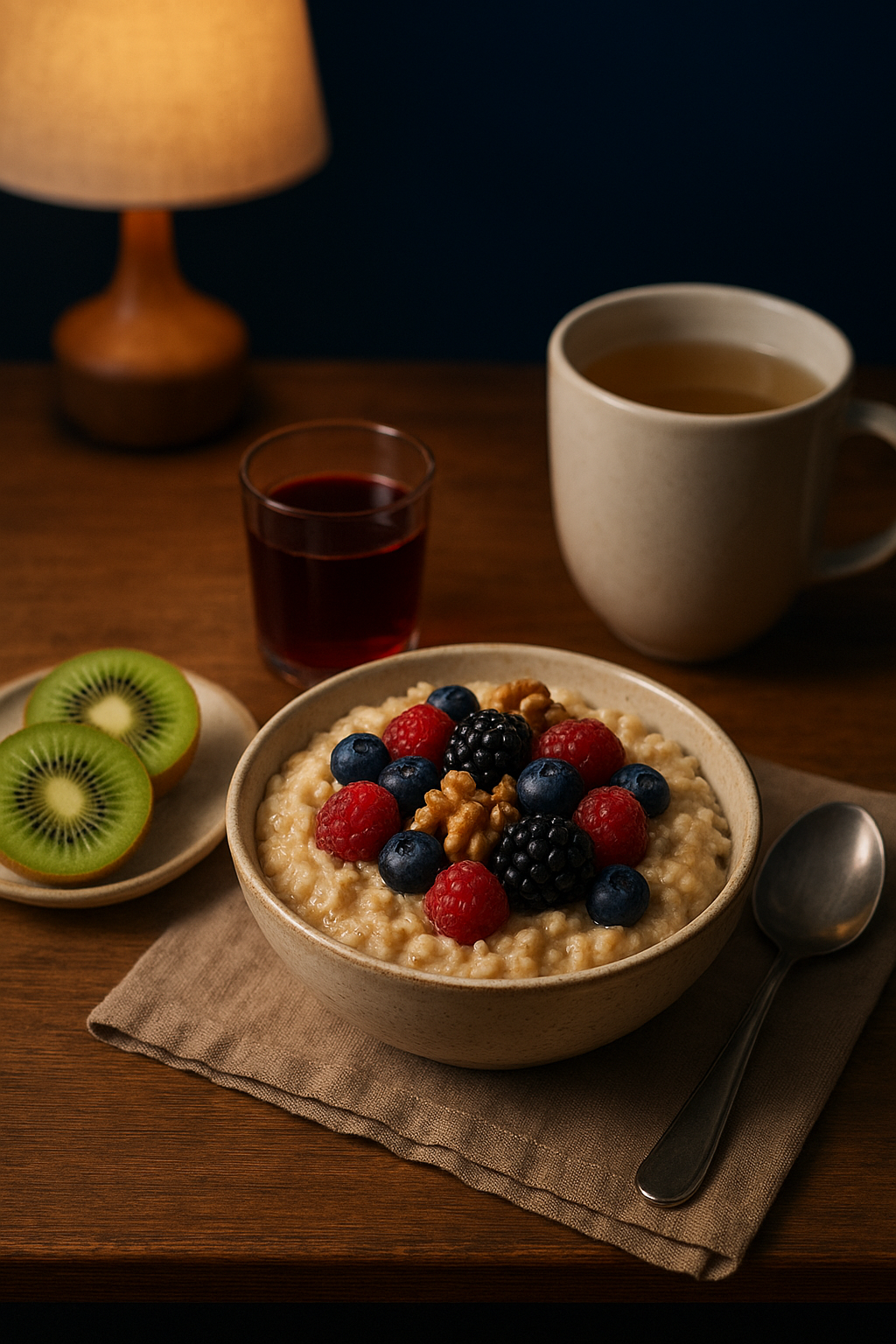
Oats are a source of complex carbohydrates, magnesium, and small amounts of melatonin. A small bowl of oatmeal can be a soothing evening snack, particularly on colder nights. Pair it with milk or fortified soy milk for additional protein and calcium.
Avoid turning bedtime oatmeal into a high-sugar dessert. Cinnamon, berries, chopped walnuts, or a spoonful of nut butter can add flavor and staying power without relying heavily on added sugar.
Bananas
Bananas contain potassium, magnesium, and vitamin B6, which plays a role in neurotransmitter production. They are also easy to digest for many people. A banana with a tablespoon of peanut or almond butter makes a simple snack that combines carbohydrates, healthy fats, and a little protein.
Nuts and seeds
Almonds, walnuts, pistachios, pumpkin seeds, and sunflower seeds provide minerals such as magnesium and zinc. Walnuts also contain small amounts of melatonin. Since nuts and seeds are calorie-dense, a small handful is usually enough.
Try a small serving of walnuts with fruit, or sprinkle pumpkin seeds over yogurt. If weight loss is one of your goals, pre-portion these foods instead of eating directly from the bag.
Fatty fish
Salmon, trout, sardines, and mackerel provide omega-3 fats and vitamin D. These nutrients support overall health and may be relevant to sleep regulation. A dinner built around fatty fish, vegetables, and a fiber-rich carbohydrate such as quinoa or sweet potato can be a satisfying, sleep-friendly meal.
Because a large meal too close to bedtime can interfere with sleep, aim to finish dinner a few hours before lying down whenever possible.
Leafy greens and beans
Spinach, kale, Swiss chard, lentils, black beans, and chickpeas provide magnesium, folate, and fiber. These foods are not instant sleep aids, but including them regularly supports a nutrient-dense eating pattern that can benefit overall energy and wellness.
For dinner, consider a lentil soup with whole-grain toast or a salmon salad with leafy greens. If beans cause gas or bloating at night, use a smaller portion and eat them earlier in the day.
Drinks that may help you wind down
Water
Staying hydrated supports overall health, but drinking a large amount right before bed may lead to more nighttime bathroom trips. Aim to drink fluids consistently throughout the day, then taper larger drinks during the last hour or two before sleep if nocturia is a concern.
Warm milk or fortified soy milk
A warm cup of milk can be a comforting bedtime ritual. Milk provides protein, calcium, and tryptophan. Fortified soy milk is a useful alternative for many people who do not consume dairy.
Choose unsweetened options when possible. If you have reflux, test whether milk close to bedtime feels comfortable for you, as individual responses vary.
Caffeine-free herbal tea
Warm herbal tea can create a calming transition from a busy day to bedtime. Chamomile, lemon balm, peppermint, rooibos, and ginger tea are naturally caffeine-free choices. The warm beverage and consistent routine may be as helpful as the tea itself.
Check labels carefully. Some products marketed as tea blends contain green tea, black tea, yerba mate, or other caffeinated ingredients. Peppermint may also worsen reflux for some people.
Foods and drinks that can interfere with sleep
Knowing what to limit is just as useful as knowing which foods to include. These choices may disrupt sleep, especially when consumed late in the day:
- Caffeine: Coffee, energy drinks, black tea, green tea, cola, chocolate, and some pre-workout products can affect sleep for hours. Many adults do best by stopping caffeine by early afternoon.
- Alcohol: Alcohol can make you feel sleepy initially, but it often disrupts sleep later in the night and may worsen snoring or sleep apnea.
- Large or high-fat meals: Heavy meals can trigger reflux, bloating, or discomfort when you lie down.
- Spicy foods: Spices may aggravate heartburn or raise body temperature in some people.
- High-sugar desserts: A large dose of added sugar may leave some people feeling restless or hungry again later.
- Excess fluids late at night: Large drinks close to bedtime can contribute to repeated nighttime waking.
A simple sleep-friendly evening eating plan
You do not need a complicated routine. If you are hungry in the evening, try one light snack about 60 to 90 minutes before bed:
- Plain Greek yogurt with kiwi and chopped walnuts
- A small bowl of oatmeal with milk, cinnamon, and berries
- A banana with a tablespoon of peanut butter
- Cottage cheese with pear slices
- A small handful of pistachios with a piece of fruit
- Warm milk or fortified soy milk with a caffeine-free herbal tea
If you eat dinner late, skip an additional snack unless you are truly hungry. The goal is to feel comfortably satisfied, not stuffed.
Practical sleep habits that matter too
Foods and drinks that can help you sleep better after 40 work best alongside consistent sleep habits. Consider these basics:
- Keep a fairly regular bedtime and wake time, including on weekends.
- Get outdoor light exposure in the morning when possible.
- Move your body most days, while avoiding intense exercise too close to bed if it keeps you alert.
- Keep your bedroom cool, dark, and quiet.
- Limit screens and stressful work during the last part of your evening.
- Talk with a healthcare professional about persistent sleep problems, loud snoring, gasping, restless legs, frequent urination, or daytime exhaustion.
Conclusion
There is no perfect bedtime food for everyone, but nutrient-rich choices such as kiwi, tart cherries, yogurt, oats, bananas, nuts, seeds, and fatty fish can fit into a routine that supports better sleep. Focus on regular meals, a light snack only when needed, earlier caffeine cutoffs, and limited alcohol. If sleep problems continue for weeks or affect daily life, it is worth discussing them with your healthcare provider.