
Protein is often discussed in the context of bodybuilding, but it is just as important for adults over 40 who want to lose fat, stay strong and feel well. As we age, maintaining muscle becomes more challenging, while busy schedules, changing hormones and lower activity levels can make it easier to gain body fat.
Making protein a priority at meals is a practical way to support your body through these changes. It does not require extreme diets or eating nothing but chicken breast. It means consistently including enough high-quality protein in the foods you already enjoy.
Why protein matters more after 40
Protein provides amino acids, which are the building blocks your body uses to maintain and repair tissues. This includes muscles, bones, skin, organs and enzymes involved in many everyday processes.
From around midlife, adults can gradually lose muscle mass and strength if they do not regularly challenge their muscles and eat enough protein. This age-related loss of muscle can affect mobility, balance, independence and metabolic health over time.
Prioritising protein can help support:
- Muscle maintenance: Protein helps your body repair and maintain muscle tissue, particularly when combined with strength training.
- Fat loss: Holding on to muscle while losing weight can help ensure more of the weight lost comes from body fat rather than lean tissue.
- Appetite control: Protein-rich meals are often more filling than meals built mainly around refined carbohydrates.
- Healthy ageing: Muscle strength is closely linked with physical function, confidence and the ability to stay active.
- Blood sugar management: Including protein with carbohydrate-containing meals may help slow digestion and reduce sharp rises and falls in energy for some people.
Protein and fat loss: why the combination works
When people try to lose weight, they often focus only on reducing calories. A calorie deficit is important for fat loss, but the quality and structure of your meals matter too.
Protein can make a calorie deficit easier to maintain because it is generally satisfying. A breakfast of eggs, Greek yoghurt or a protein smoothie may keep you fuller for longer than toast or cereal alone. Likewise, adding chicken, tofu, fish, beans or cottage cheese to lunch can make it less likely that you will be searching for snacks an hour later.
Protein also supports lean mass during weight loss. This is especially useful after 40, when preserving muscle should be a major priority. The best results usually come from combining adequate protein with regular resistance exercise, such as weight training, bodyweight movements, resistance bands or Pilates with progressive challenge.
How much protein do you need after 40?
Your ideal protein intake depends on your body size, activity level, goals, appetite and medical history. General minimum recommendations are often lower than the amount many active adults may find useful for preserving muscle and supporting fat loss.
A commonly used starting point for healthy adults over 40 is around 1.0 to 1.2 grams of protein per kilogram of body weight per day. People who are strength training regularly, dieting for fat loss or highly active may benefit from roughly 1.2 to 1.6 grams per kilogram per day.
For example, a person weighing 75 kg might aim for approximately 90 to 120 grams of protein daily, depending on their needs and goals. This is only a guide, not a prescription.
If you have kidney disease, significant liver disease, are pregnant, or have been advised to limit protein for another medical reason, speak with your GP, registered dietitian or qualified healthcare professional before increasing your intake.
Spread protein across the day
Many people eat very little protein at breakfast, a moderate amount at lunch and most of their daily intake at dinner. While your total daily intake matters most, spreading protein more evenly across meals can be a helpful habit for muscle maintenance and appetite management.
A simple target is to include a meaningful protein source at each meal. Depending on your needs, this may be around 25 to 40 grams per meal, with an optional protein-rich snack if needed.
What 25 to 30 grams of protein can look like
- 120 to 150 g cooked chicken, turkey or lean beef
- 1 tin of tuna or salmon, depending on size
- 150 to 200 g Greek yoghurt or skyr, depending on the product
- 3 eggs with additional egg whites or a side of cottage cheese
- 150 to 200 g tofu, tempeh or high-protein plant-based mince
- A protein shake made with protein powder, milk or fortified soy milk
- A bean or lentil meal paired with grains, tofu, dairy or another protein source
Labels vary, so check the nutrition information rather than assuming every product provides the same amount.
Easy ways to prioritise protein at every meal
Start with breakfast
Breakfast is often the easiest meal to improve. Rather than building it around pastries, toast or cereal alone, begin with a protein source and add fibre-rich carbohydrates and healthy fats around it.
- Greek yoghurt with berries, seeds and oats
- Eggs with vegetables and wholegrain toast
- Protein oats made with Greek yoghurt, protein powder or milk
- A smoothie with protein powder, milk or soy milk, fruit and spinach
- Cottage cheese on toast with tomatoes, smoked salmon or fruit
Build lunches around a protein anchor
Choose the protein first, then add vegetables, carbohydrates and a source of flavour or healthy fat. This approach makes balanced meals easier to assemble.
- Chicken, lentil or tuna salad with wholegrains
- Leftover roast meat, tofu or fish with vegetables and rice
- Soup with beans, chicken or lentils, served with a protein-rich side
- A wholegrain wrap with turkey, hummus, salad and yoghurt-based dressing
Upgrade dinner without making separate meals
Family meals can still work well. Aim to make protein a visible part of your plate, alongside plenty of vegetables and a sensible portion of carbohydrates.
- Salmon, potatoes and roasted vegetables
- Turkey or lentil chilli with beans and salad
- Stir-fry with prawns, chicken, tofu or tempeh
- Lean beef, bean or lentil bolognese with wholewheat pasta
- Fish curry or chickpea curry with vegetables and rice
Choose satisfying snacks when needed
Snacks are not essential, but they can be useful if there is a long gap between meals, you train regularly or you struggle to meet your protein needs.
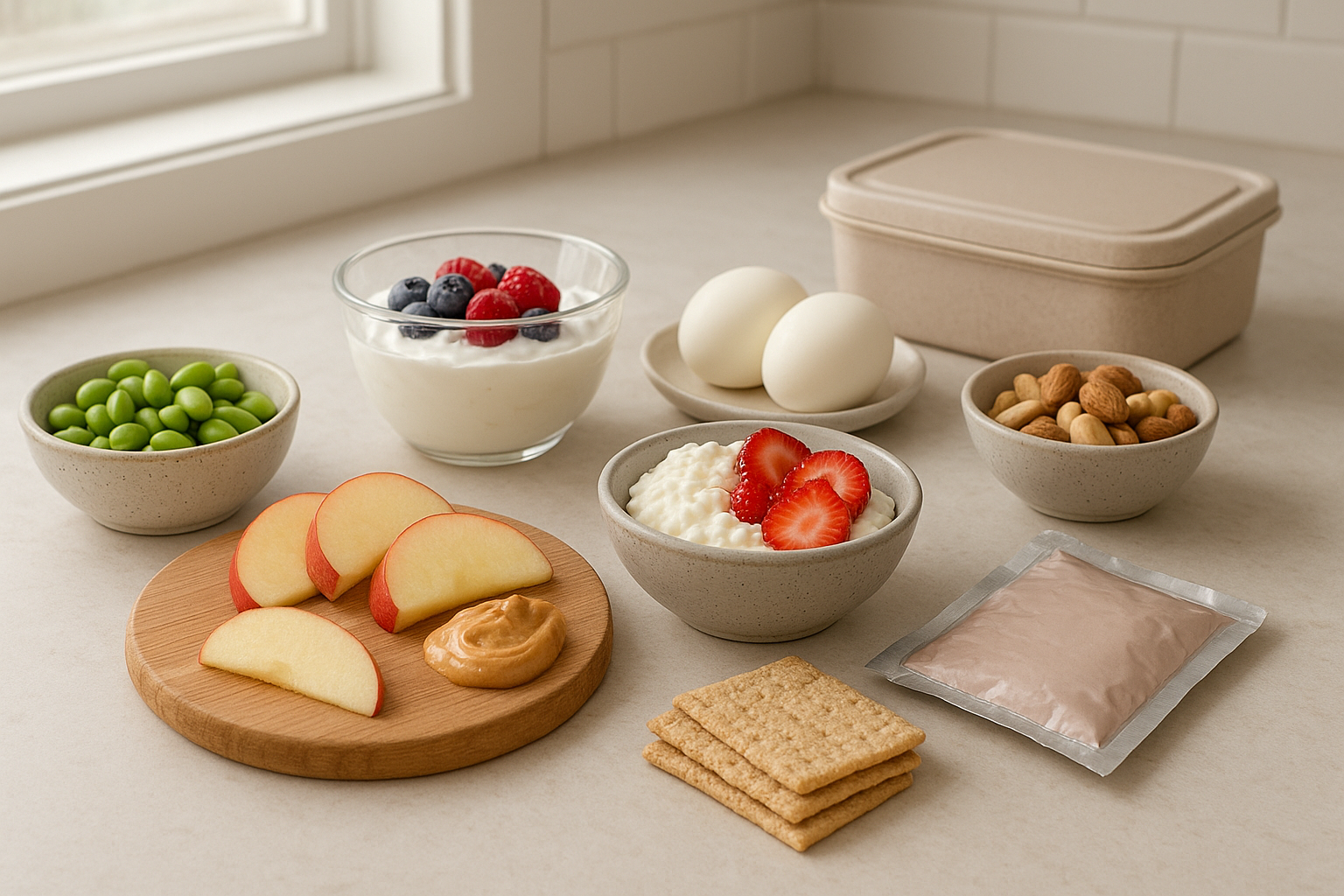
- Greek yoghurt or skyr
- Cottage cheese with fruit or crackers
- Edamame beans
- Boiled eggs
- Protein shake
- Roasted chickpeas
- Apple slices with peanut butter, alongside yoghurt or a glass of milk
Do plant-based eaters need to think differently?
Plant-based diets can provide plenty of protein, but they often require a little more planning. Include a variety of protein sources over the day, such as tofu, tempeh, edamame, lentils, beans, chickpeas, peas, seitan, soy yoghurt, fortified soy milk, nuts, seeds and protein powders.
Some plant proteins are less concentrated than animal-based options, so portion sizes may need to be larger. Combining protein sources, such as beans with grains or tofu with wholegrains, can also help create satisfying, balanced meals.
Common protein mistakes to avoid
- Saving all your protein for dinner: Try including it at breakfast and lunch too.
- Relying only on protein bars: They can be convenient, but whole foods also provide fibre, vitamins and minerals.
- Ignoring vegetables and fibre: Protein works best as part of a balanced eating pattern.
- Assuming more is always better: Extremely high intakes are not necessary for most people and may crowd out other nutritious foods.
- Skipping strength training: Protein supports muscle, but muscles also need a reason to adapt and stay strong.
A practical protein-first approach
You do not need to track every gram forever. Start by looking at your usual meals and asking one simple question: Where is the protein?
- Choose one protein source for breakfast.
- Include a palm-sized serving of protein at lunch and dinner.
- Keep two or three convenient protein options at home.
- Pair your protein intake with two or more weekly strength-training sessions where possible.
- Adjust based on hunger, energy, progress and advice from a qualified professional.
Conclusion
Prioritising protein after 40 is not about following a restrictive diet. It is about giving your body the nutrition it needs to maintain muscle, manage appetite and support healthy fat loss. Build meals around protein, spread it across the day and combine it with regular strength training for a realistic, sustainable approach to long-term health.