
Many adults wonder whether eating several small meals a day can rev up a slowing metabolism. It is an appealing idea: if digestion uses energy, then eating more often should burn more calories—right?
In most cases, eating more often does not boost your metabolism after 40 in a meaningful way. Meal frequency can affect hunger, energy, food choices, and how easy it feels to manage portions. But when total calorie intake and food quality are similar, eating six times per day does not typically burn more calories than eating three times per day.
The best approach is usually the one that helps you eat enough protein and fiber, maintain energy, manage hunger, and stay consistent with your goals.
What Actually Determines Your Metabolism After 40?
Your daily energy expenditure—often called metabolism or calorie burn—comes from several sources:
- Resting metabolic rate: The energy your body uses to keep you alive at rest, including breathing, circulation, and organ function.
- Physical activity: Structured exercise plus everyday movement such as walking, standing, household tasks, and taking the stairs.
- Thermic effect of food: The energy used to digest, absorb, and process food.
- Adaptive changes: Your body may use slightly less energy when you lose weight or eat substantially fewer calories for a prolonged period.
After 40, metabolism is not doomed to suddenly collapse. However, many people become less active, lose some muscle mass over time, sleep less, experience more stress, or face hormonal changes that affect appetite and body composition. These factors can make fat loss feel harder.
Building or maintaining muscle, moving regularly, eating adequate protein, and avoiding overly restrictive dieting generally matter more than how many times you eat each day.
Why More Frequent Meals Do Not Usually Increase Calorie Burn
The thermic effect of food is real. Your body uses energy to process every meal and snack. However, the total effect depends mostly on how much you eat and what you eat, not how often you eat.
For example, imagine two people each eat 1,800 calories in a day with similar amounts of protein, carbohydrates, and fat. One person eats three meals, while the other eats six smaller meals. The total energy needed to digest those 1,800 calories is likely to be very similar.
Breaking food into more eating occasions does not turn the same calories into a larger metabolic advantage. Frequent meals may be useful for some people, but they are not a reliable metabolism-boosting strategy.
Protein Has a Bigger Effect Than Meal Frequency
Protein requires more energy to digest than carbohydrates or fat. It also supports fullness and helps preserve lean muscle during weight loss. For adults over 40, prioritizing protein at meals can be more helpful than simply adding snacks.
A practical starting point is to include a protein-rich food at each meal, such as:
- Eggs, Greek yogurt, cottage cheese, or milk
- Chicken, turkey, fish, lean beef, or pork
- Tofu, tempeh, edamame, beans, or lentils
- Protein shakes when convenient
Your individual protein needs depend on body size, activity, medical history, and dietary preferences. If you have kidney disease or have been told to limit protein, check with your healthcare professional for individualized guidance.
Can Eating More Often Still Help With Fat Loss?
It can—but not because it directly speeds up metabolism. The value of meal frequency is personal. A more frequent schedule may help if it makes it easier to avoid becoming overly hungry, reduces impulsive snacking, or helps you spread protein across the day.
On the other hand, frequent eating can make fat loss harder for some people. Each snack is another opportunity to eat beyond hunger, especially when foods are convenient, highly processed, or eaten while distracted.
More Frequent Meals May Work Well If You:
- Feel shaky, overly hungry, or low in energy when meals are spaced too far apart.
- Exercise regularly and need a planned snack before or after training.
- Struggle to eat enough protein or calories at larger meals.
- Find that structured mini-meals reduce late-afternoon or evening overeating.
- Have a medical condition or take medication that affects meal timing; follow the guidance of your clinician.
Fewer, More Satisfying Meals May Work Better If You:
- Find that snacks tend to become extra calories rather than planned nourishment.
- Prefer larger meals that keep you full for several hours.
- Are busy and want a simpler routine.
- Notice that grazing makes it difficult to recognize true hunger and fullness.
- Often eat out of boredom, stress, or habit between meals.
How Often Should You Eat After 40?
There is no universally ideal number of meals. For many adults over 40, three balanced meals per day, with an optional planned snack if needed, is a practical starting point. This pattern can make it easier to meet nutrition needs without constantly thinking about food.
Try the schedule for two to three weeks and pay attention to your hunger, energy, sleep, digestion, workout performance, and progress toward your goals. Adjust based on what you learn.
The key is to choose a structure you can repeat most days—not a schedule that feels perfect for a week but exhausting to maintain.
What a Metabolism-Supportive Meal Pattern Looks Like
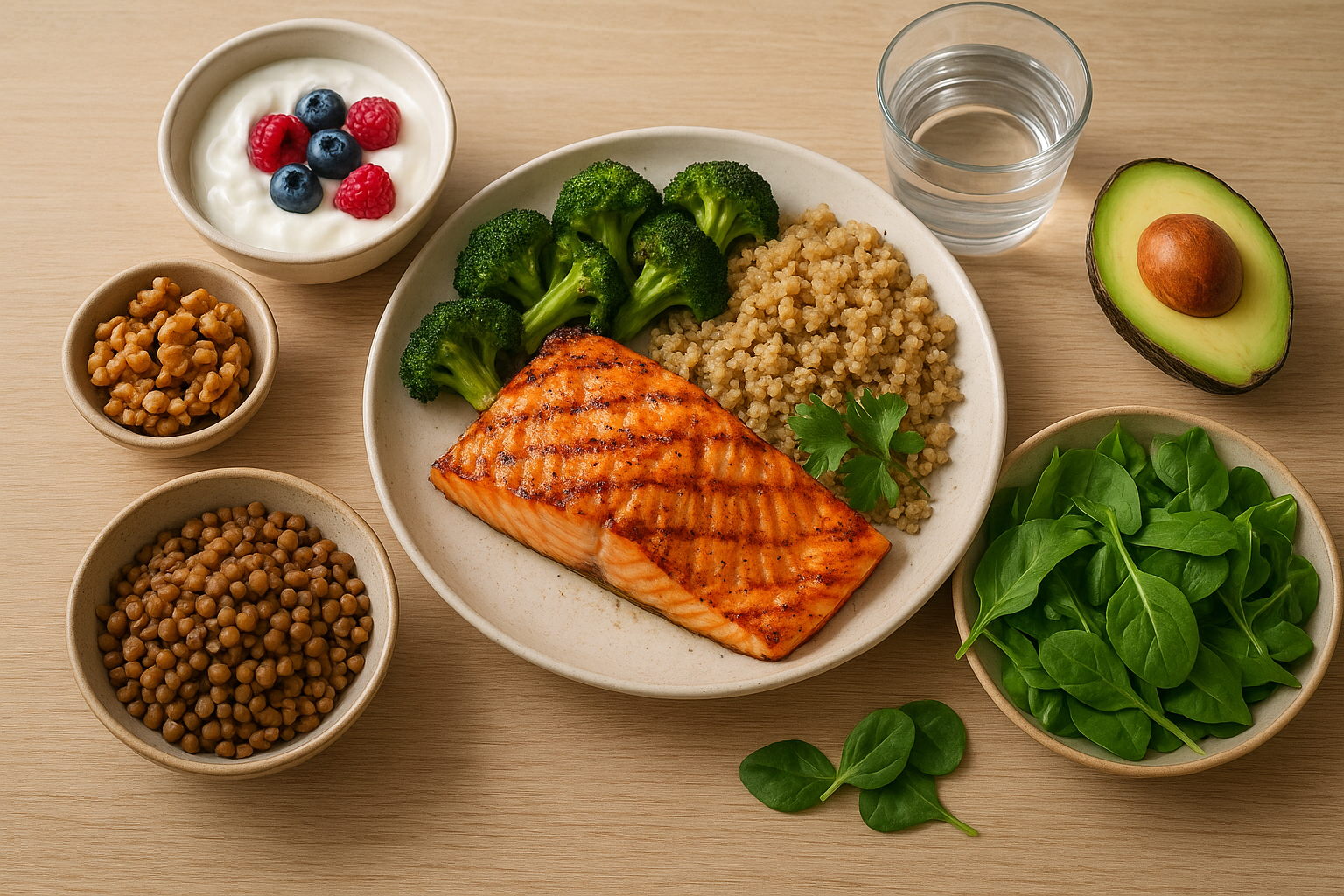
Instead of trying to eat every two or three hours, build meals that are satisfying and nutrient-dense. A balanced plate can include:
- Protein: A palm-sized or otherwise appropriate serving of protein-rich food.
- Fiber-rich plants: Vegetables, fruit, beans, lentils, or whole grains.
- Smart carbohydrates: Potatoes, oats, brown rice, quinoa, whole-grain bread, or fruit, adjusted to your needs and activity level.
- Healthy fats: Avocado, olive oil, nuts, seeds, or fatty fish.
Example: Three Meals and One Optional Snack
Breakfast: Greek yogurt with berries, chia seeds, and oats, or eggs with vegetables and whole-grain toast.
Lunch: A large salad or grain bowl with chicken, salmon, tofu, or beans; plenty of vegetables; and a satisfying dressing or olive oil-based fat.
Optional snack: Cottage cheese and fruit, an apple with peanut butter, a protein shake, or hummus with vegetables.
Dinner: Fish, chicken, lean meat, tofu, or lentils with roasted vegetables and a serving of potatoes, rice, or another high-fiber carbohydrate.
This is only one pattern. You may prefer two larger meals, three meals without snacks, or four smaller meals. The goal is adequate nutrition and a calorie intake that matches your needs—not following a rigid eating rule.
Other Ways to Support Metabolic Health After 40
If your goal is better body composition, steady energy, or fat loss, these habits generally have more impact than adding extra meals:
- Strength train regularly. Resistance training helps maintain or build muscle, which supports healthy aging, mobility, and daily energy use.
- Increase everyday movement. Walk more, take movement breaks, use stairs, garden, or do household activities. Consistent daily movement adds up.
- Prioritize protein and fiber. These nutrients support fullness and make balanced eating easier.
- Sleep enough. Poor sleep can increase hunger, cravings, and fatigue, making healthy choices more difficult.
- Manage stress realistically. Chronic stress can disrupt routines and lead to emotional eating. Short walks, breathing exercises, social support, and downtime can help.
- Avoid extreme restriction. Very low-calorie plans can be difficult to sustain and may leave you tired, hungry, and less active.
Common Meal Frequency Myths
Myth: You must eat every few hours to prevent your metabolism from slowing.
Reality: For most healthy adults, going several hours between meals does not cause the metabolism to shut down. What matters more is your overall nutrition, activity, muscle mass, and total calorie intake over time.
Myth: Skipping breakfast always causes weight gain.
Reality: Breakfast can be helpful for many people, especially if it supports protein intake and steadier energy. But it is not mandatory for everyone. The best routine is one that helps you make nourishing choices throughout the day.
Myth: Snacking is always bad for fat loss.
Reality: A planned snack can be useful when it prevents intense hunger or supports workouts. The issue is not snacking itself; it is whether snacks fit your hunger, goals, and overall intake.
When to Speak With a Healthcare Professional
Changes in weight, appetite, fatigue, sleep, or digestion are not always explained by meal timing. Consider discussing your concerns with a qualified healthcare professional if you have unexplained weight changes, persistent fatigue, symptoms of thyroid problems, significant digestive issues, or concerns related to menopause, diabetes, or medication.
A registered dietitian can also help you develop a meal pattern that fits your health history, food preferences, schedule, and body-composition goals.
Conclusion
Eating more often does not reliably boost your metabolism after 40. The number of meals you eat matters far less than the quality and quantity of food you eat overall, along with your protein intake, strength training, daily movement, sleep, and consistency.
Choose a meal frequency that helps you feel satisfied, energized, and in control around food. For many people, that means three balanced meals and an optional protein- and fiber-rich snack—not constant grazing in the name of metabolism.