
After 40, many adults notice that maintaining their weight feels different than it did in their 20s or 30s. Energy needs may change, daily movement can decline, recovery may take longer, and muscle mass can gradually decrease with age. While nutrition, sleep, and stress management all matter, strength training after 40 is one of the most practical tools for supporting metabolism and maintaining a healthy body composition.
Strength training does not require extreme workouts or hours in the gym. A consistent plan built around basic movements can help preserve muscle, improve physical function, and make it easier to stay active for years to come.
What metabolism actually means
Metabolism refers to the many chemical processes your body uses to create and use energy. When people talk about a “slow metabolism,” they often mean that their body seems to require fewer calories than it once did or that fat loss has become more difficult.
Your daily energy expenditure is influenced by several factors:
- Resting metabolic rate: the energy your body uses to keep you alive at rest, including breathing, circulation, and organ function.
- Physical activity: planned exercise plus everyday movement such as walking, standing, household tasks, and taking the stairs.
- The thermic effect of food: the energy used to digest and process food.
- Body composition: the amount of lean tissue and fat tissue you carry.
Metabolism is not controlled by one single habit. However, muscle tissue is an important part of a healthy, active body, which is why resistance exercise deserves a central place in a fitness routine after 40.
Why muscle matters more as you get older
Adults naturally tend to lose muscle mass and strength over time, particularly when they are inactive, dieting aggressively, recovering from illness, or not eating enough protein. This age-related loss of muscle can affect more than appearance. It can make daily activities harder, reduce exercise capacity, and contribute to a lower overall activity level.
Muscle uses energy at rest, although it is important to keep expectations realistic: adding muscle will not create a dramatic overnight increase in calorie burn. The larger metabolic benefit often comes from the full picture. More muscle and strength can help you move more comfortably, train harder, improve insulin sensitivity, and maintain an active lifestyle.
In other words, strength training after 40 supports metabolism by helping you protect the physical capacity that keeps you moving.
How strength training supports metabolic health
It helps preserve lean muscle during fat loss
When you lose weight through calorie restriction alone, some of that weight can come from muscle as well as body fat. Resistance training signals your body that muscle is needed. Combined with adequate protein and a moderate calorie deficit when fat loss is the goal, strength training can help preserve more lean mass.
Preserving muscle matters because it supports strength, mobility, and long-term weight maintenance. It can also help you avoid the “smaller but weaker” outcome that can occur after repeated restrictive diets.
It can increase post-exercise energy use
A challenging strength workout requires energy during the session and during recovery afterward. Your body uses energy to repair muscle tissue, restore fuel stores, and adapt to training. This effect is not a reason to rely on exercise alone for fat loss, but it is a useful contribution to your overall energy balance.
It supports blood sugar management
Muscles use glucose for fuel. Regular resistance training can improve the way muscles take up and use glucose, which supports healthy blood sugar regulation. This can be especially valuable after 40, when insulin sensitivity may change due to age, reduced activity, poor sleep, or increased body fat.
If you have diabetes, take glucose-lowering medication, or have another medical condition, speak with your healthcare professional before changing your exercise routine.
It makes everyday movement easier
One of the most overlooked benefits of strength training is that it can help you stay more active outside the gym. Stronger legs can make walking and climbing stairs easier. Better upper-body strength can make carrying groceries, lifting children or grandchildren, and doing household tasks less tiring.
That extra daily movement can have a meaningful impact on total energy expenditure over time. A training plan that helps you enjoy moving more is often more useful than a punishing workout plan you cannot maintain.
It supports healthy aging and independence
Metabolic health is connected to the ability to remain active. Building strength supports balance, bone health, coordination, and confidence with movement. These benefits may not show up on a calorie-tracking app, but they are highly relevant for long-term health and quality of life.
What effective strength training after 40 looks like
You do not need complicated exercises to get results. The best program is one that matches your current fitness level, schedule, preferences, and any physical limitations. For many adults, two to three full-body strength sessions per week is an effective starting point.
A well-rounded routine often includes these movement patterns:
- Squat or sit-to-stand: bodyweight squats, goblet squats, or chair stands.
- Hip hinge: Romanian deadlifts, kettlebell deadlifts, or hip hinges with a resistance band.
- Push: wall push-ups, incline push-ups, dumbbell chest presses, or overhead presses.
- Pull: resistance-band rows, cable rows, dumbbell rows, or machine rows.
- Single-leg work: step-ups, supported split squats, or reverse lunges.
- Core stability: dead bugs, bird dogs, planks, or loaded carries.
A simple beginner-friendly weekly plan
Try two nonconsecutive full-body sessions each week. Begin with one to two sets of each exercise, using a weight that feels challenging but allows good form.
- Chair squat or goblet squat: 8 to 12 repetitions
- Dumbbell or band row: 8 to 12 repetitions
- Incline push-up or dumbbell chest press: 8 to 12 repetitions
- Romanian deadlift or hip hinge: 8 to 12 repetitions
- Step-up or supported split squat: 6 to 10 repetitions per side
- Bird dog or plank: 20 to 30 seconds
Rest for about 60 to 90 seconds between sets. As the exercises become easier, progress gradually by adding a few repetitions, increasing resistance, improving control, or adding another set.
How hard should you train?
For most people, a useful guideline is to finish a set feeling like you could complete roughly two to four more repetitions with good form. This is challenging enough to encourage adaptation without needing to push every set to exhaustion.
Good technique matters more than lifting heavy right away. Start conservatively, especially if you are returning to exercise after a long break. A qualified trainer or physical therapist can help you learn movements safely if you have pain, injuries, or uncertainty about where to begin.
Pair strength training with the habits that support metabolism
Resistance exercise works best as part of a broader routine. To support metabolism and fat loss after 40, focus on the habits that make training effective and sustainable.
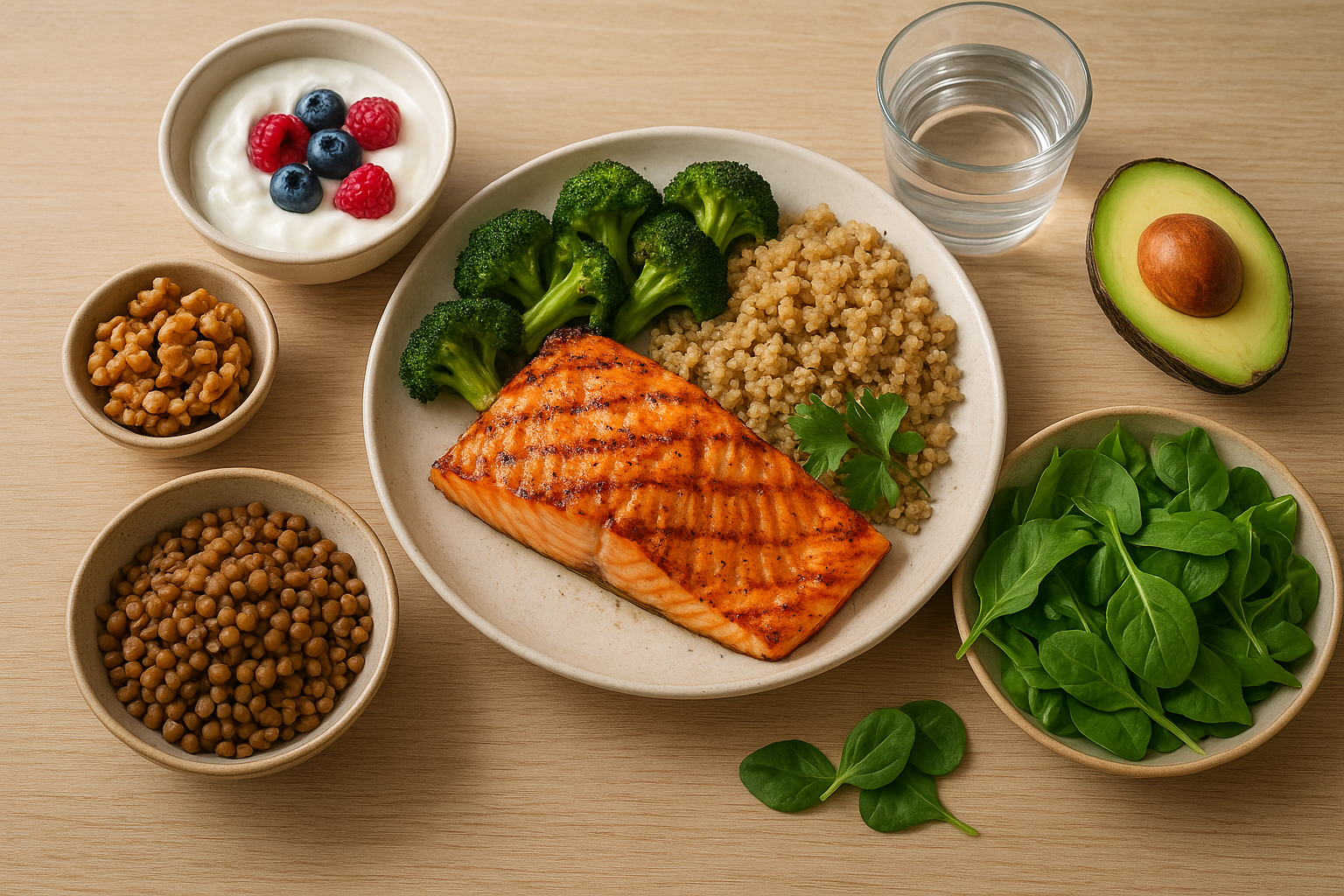
- Eat enough protein: Protein helps support muscle repair and can improve fullness. Spread protein-containing foods across meals, including options such as eggs, Greek yogurt, fish, poultry, tofu, beans, lean meat, or cottage cheese.
- Avoid overly aggressive dieting: Severe calorie restriction can make workouts harder, increase hunger, and raise the risk of losing lean mass. A moderate, sustainable approach is usually easier to maintain.
- Walk regularly: Walking supports daily energy use, cardiovascular health, recovery, and stress management. Short walks after meals are a practical option for many people.
- Prioritize sleep: Poor sleep can affect appetite, recovery, exercise performance, and food choices. Aim for a consistent bedtime routine and sufficient sleep whenever possible.
- Manage recovery: More training is not always better. Allow rest days, vary workout intensity, and pay attention to persistent fatigue or pain.
Common mistakes to avoid
Only doing cardio for fat loss
Cardio is valuable for heart health and energy expenditure, but relying on it alone may leave muscle maintenance out of the plan. Combining regular walking or cardio with strength training is often a more balanced approach.
Changing everything at once
Trying to start a demanding workout plan, eliminate entire food groups, and radically reduce calories at the same time can lead to burnout. Start with two strength sessions per week and build from there.
Ignoring pain
Normal muscle fatigue is different from sharp, worsening, or joint-specific pain. Modify the movement, reduce the load, or seek guidance when needed. Training should challenge you, not repeatedly aggravate an injury.
Expecting rapid scale changes
Strength training can affect water retention, especially when you are new to exercise or increasing workout volume. The scale may not reflect progress every week. Also track strength improvements, waist measurements, energy levels, how clothes fit, and how daily tasks feel.
When to talk with a healthcare professional
Most adults can benefit from some form of strength training, but it is wise to seek medical guidance before beginning if you have uncontrolled blood pressure, heart disease, severe osteoporosis, recent surgery, significant joint pain, dizziness with exercise, or other health concerns. A clinician, physical therapist, or qualified fitness professional can help you choose an appropriate starting point.
Conclusion
Strength training after 40 is not about chasing extreme workouts or trying to “hack” your metabolism. It is a practical way to preserve muscle, build strength, improve daily movement, and support long-term metabolic health. Start with simple full-body exercises twice per week, progress gradually, and pair your training with adequate protein, walking, sleep, and a sustainable nutrition plan. Consistency will matter far more than perfection.